
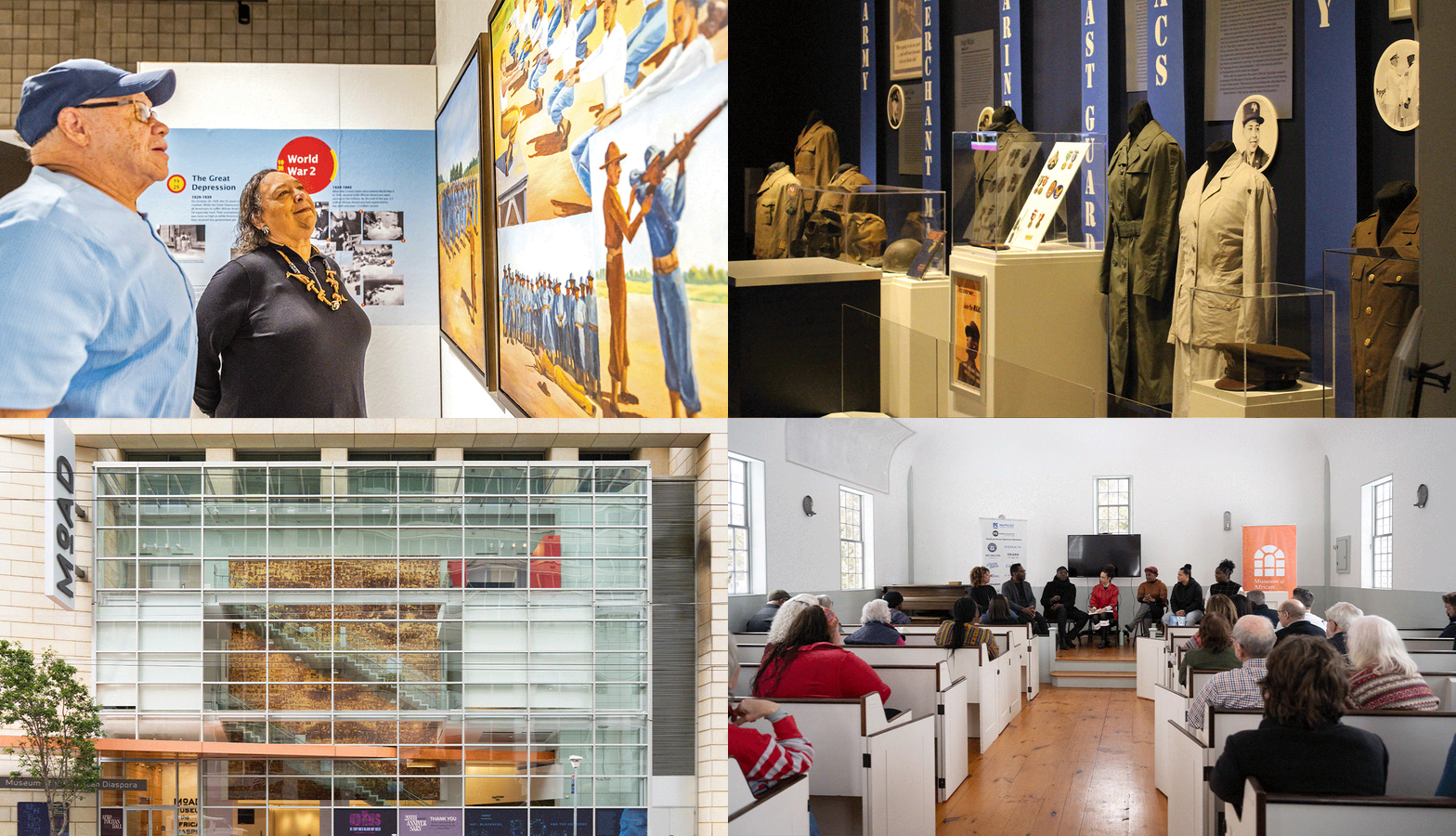
The Smithsonian National Museum of African American History and Culture may be the most visible home for Black history on a national stage. Still, it’s not the only museum preserving and interpreting Black culture. Across the country, regional African American museums—often rooted in their own communities—offer powerful local perspectives on Black history.
From vibrant cultural centers to small museums housed in historic churches, barbershops, or schoolhouses, these institutions honor Black history, culture, and the arts. Many spotlight local artists, performers, activists, and community leaders—telling stories of resilience that are too often overlooked.
After visiting the Southampton African American Museum on Long Island this past summer, I wondered why more people don’t know about the regional museums in their own backyards.
Below are the African American museums I found through my research. Each tells a distinct story rooted in place, yet connected to a broader American narrative of creativity, resilience, and cultural impact. I hope you’ll visit a regional African American museum near you and learn more about the rich Black history woven into your community.
South
Old Dillard Museum (Fort Lauderdale, FL)
Housed in a historic segregated school building, the museum celebrates the community’s vibrant Black history, culture, and contributions through art, music, sports, and storytelling.
What you’ll see: Historical exhibits, archival materials, photographs, and cultural programming showcasing Fort Lauderdale’s Black heritage.
Must-see: Preserved classrooms and the auditorium of the former Dillard High School, which evoke the era of segregated education and community pride.
Website: browardschools.com (search “Old Dillard Museum”)
Ritz Theatre and LaVilla Museum (Jacksonville, FL)
Located in the historically Black LaVilla neighborhood, this museum celebrates Black history, music, and entertainment in Jacksonville.
What you’ll see: Exhibits on Black performers, local legends, music history, and African American life in LaVilla.
Must-see: The LaVilla entertainment gallery highlighting icons like James Brown and Ray Charles, and other performers who shaped the neighborhood’s cultural legacy.
Website: ritzjacksonville.com
Wells’ Built Museum of African American History & Culture (Orlando, FL)
Located in Orlando’s historic Parramore District, the museum explores Black life during Jim Crow and highlights celebrities who visited the once-bustling Black entertainment hub.
What you’ll see: Exhibits on local civil rights leaders, Black-owned businesses, musicians, and community life.
Must-see: The restored lobby and guest spaces of the Black-owned Wells’ Built Hotel, a haven for Black entertainers during segregation.
Website: wellsbuilt.org
Dr. Carter G. Woodson African American Museum (St. Petersburg, FL)
A community-focused museum honoring African American history while spotlighting local and national cultural contributions.
What you’ll see: Exhibits on history, art, and culture, along with educational programs and events.
Must-see: Harriet Tubman: The Beacon of Hope, a statue in the museum’s Legacy Garden.
Website: woodsonmuseum.org
Zora Neale Hurston National Museum of Fine Arts (Eatonville, FL)
Named for the legendary author, this museum centers Black art and cultural expression in one of America’s oldest incorporated Black towns—once home to Hurston herself.
What you’ll see: Contemporary exhibitions including painting, sculpture, film, and photography by Black artists.
Must-see: Historic photographs connecting Eatonville’s story to Hurston’s life and work, plus images from the annual Zora Neale Hurston Festival of the Arts and Humanities.
Website: zoranealehurstonmuseum.com
National Civil Rights Museum (Memphis, TN)
Built around the former Lorraine Motel, where Dr. Martin Luther King Jr. was assassinated, the museum tells the story of the American Civil Rights Movement.
What you’ll see: More than 260 artifacts, interactive exhibits, films, oral histories, and historic spaces tracing civil rights history.
Must-see: Room 306 and the Lorraine Motel balcony, preserved as they were on April 4, 1968.
Website: civilrightsmuseum.org
Mississippi Civil Rights Museum (Jackson, MS)
Eight galleries trace Mississippi’s civil rights history from slavery and Jim Crow through the modern movement and its global impact.
What you’ll see: Historic photographs, documents, artifacts, interactive displays, installations, and oral histories.
Must-see: The “This Little Light of Mine” gallery, an immersive space bringing the movement’s courage, brutality, and triumph into sharp focus.
Website: mcrm.mdah.ms.gov
Birmingham Civil Rights Institute (Birmingham, AL)
A living memorial and cornerstone of the civil rights story, exploring Birmingham’s pivotal role while empowering future generations to pursue justice.
What you’ll see: Immersive exhibits, historic photographs, multimedia installations, and personal papers of civil rights leaders.
Must-see: The 16th Street Baptist Church bombing exhibit, confronting the 1963 tragedy with sobering depth.
Website: bcri.org
Harvey B. Gantt Center for African-American Arts + Culture (Charlotte, NC)
Named after Charlotte’s first African American mayor, the Gantt Center is dedicated to celebrating, presenting, and advancing African American art, history, and creative expression.
What you’ll see: Contemporary and historic African American art, performances, films, and lectures.
Must-see: The state-of-the-art studio and digital arts lab with equipment, software, instruction, and mentorship.
Website: ganttcenter.org
International African American Museum (Charleston, SC)
Exhibitions center on the African diaspora, the Middle Passage, and global Black connections.
What you’ll see: Immersive exhibitions featuring artifacts, interactive media, genealogy resources, and contemporary art.
Must-see: The African Ancestors Memorial Garden, located on the site where an estimated 40% of enslaved Africans entered North America.
Website: iaamuseum.org
National Museum of African American Music (Nashville, TN)
The only museum in the U.S. dedicated exclusively to music created and inspired by African Americans.
What you’ll see: Artist spotlights, listening stations, memorabilia, archives, and genre-focused exhibitions.
Must-see: Interactive sound booths where visitors can isolate vocals and instruments to experience Black music creation firsthand.
Website: nmaam.org
New Orleans African American Museum (New Orleans, LA)
Dedicated to preserving and celebrating African American history, art, and culture in New Orleans and the African diaspora.
What you’ll see: Contemporary and historical art, murals, installations, gardens, and rotating exhibitions.
Must-see: Ancestral Odyssey, a multimedia installation blending African spirituality, technology, and contemporary art.
Website: noaam.org
Southwest
African American Museum of Dallas (Dallas, TX)
Home to one of the nation’s largest collections of African American folk art.
What you’ll see: Contemporary art exhibitions, cultural history displays, and community storytelling.
Must-see: The museum’s renowned African American folk art collection.
Website: aamdallas.org