
Is yoga among your wellness routines? Share your thoughts in the comments below.
It’s not funny when you cough or laugh and then pee in your pants. It’s a loss of bladder control called stress incontinence.
This can also happen with a sneeze, jump or lift.
The culprit? Partly Mother Time.
As one ages, one doesn’t just sag externally but internally, says Jana Long, 73, a Baltimore, MD, yoga educator and therapist for older adults.
The internal includes your pelvic floor, a muscle hammock that keeps your vagina, bladder and rectum in place.
Add to the tab of time: pregnancies, weight gain, hysterectomy, chronic coughs and more.
You’re not alone if you gotta go while on the go. Actor Taraji P. Henson, actress and entrepreneur Tabitha Brown and comedians Whoopi Goldberg and Kym Whitley all ‘fess up on camera.
“Doctors are well versed in it because the prevalence is so high,” says Tracey Small Wilson, MD, FACS, a urologist with specialty training in urogynecology and a urology and reconstructive pelvic surgery professor at the University of Alabama at Birmingham.
But you shouldn’t have to sacrifice playtime with your kids, grandkids or partner.
Instead, don't give into pee pressure. Try yoga.
“Even five minutes a day goes a long way if you practice regularly,” Long says. “It builds strength, including your pelvic floor.”
She suggests six yoga postures to gird your loins. Empty your bladder before working out. And check with your health care provider before adopting a new fitness routine.
Poses to Support Pelvic Floor Tone and Bladder Control
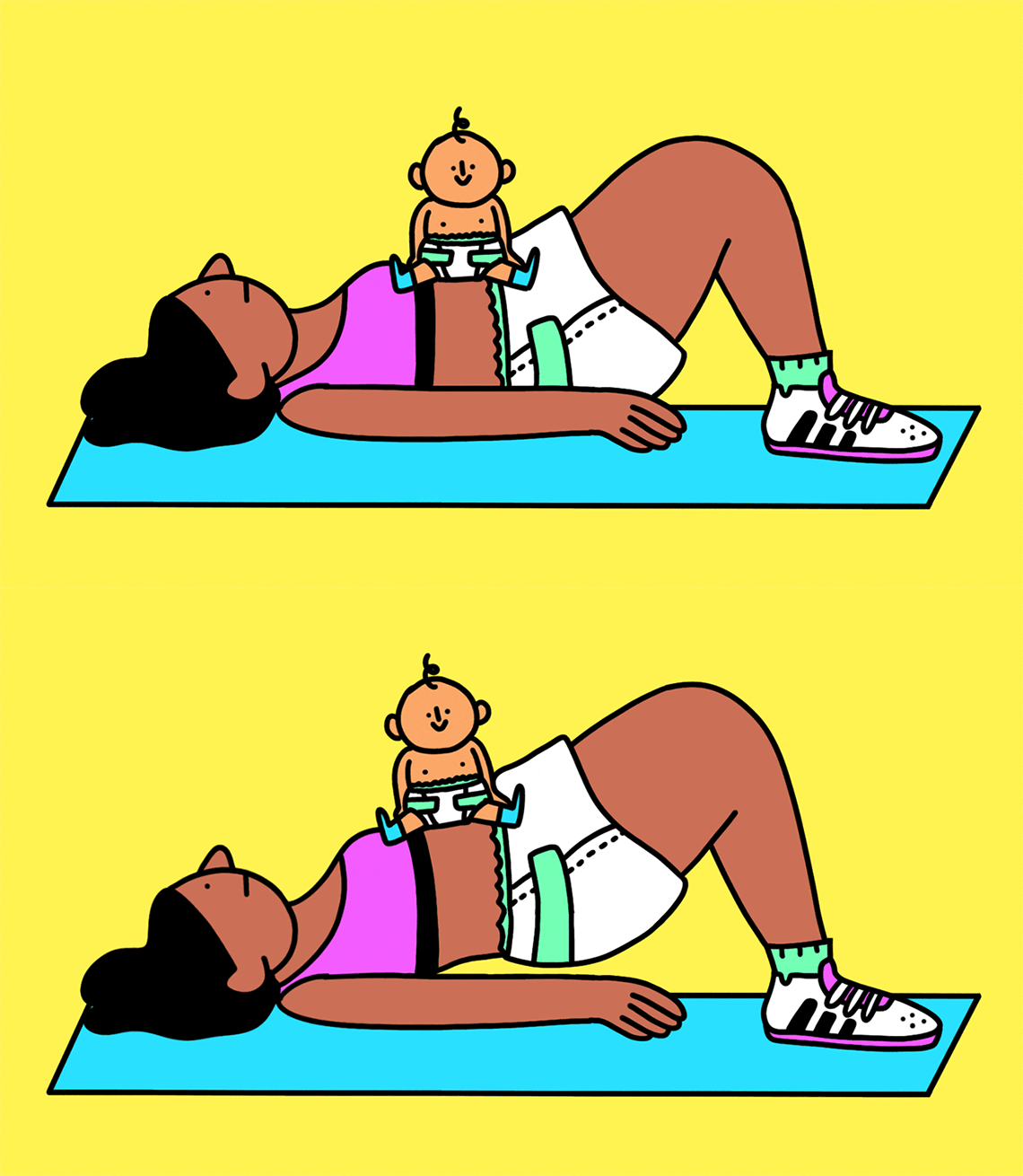
ONE: PELVIC TILT
To start: Lie on the floor, face up. Bend your knees till the soles of your feet are flat on the floor, about hip-width apart and with toes forward. Your arms should be comfortable at your sides, palms down.
The move: Tilt your pelvis up while keeping your back and feet planted on the floor. Inhale as you tilt, hold the breath, and hold the tilt for a few seconds. Then exhale as you lower.
Form: Do not allow your knees to splay outward. Draw them slightly toward your core or midbody. Your spine should remain straight.