
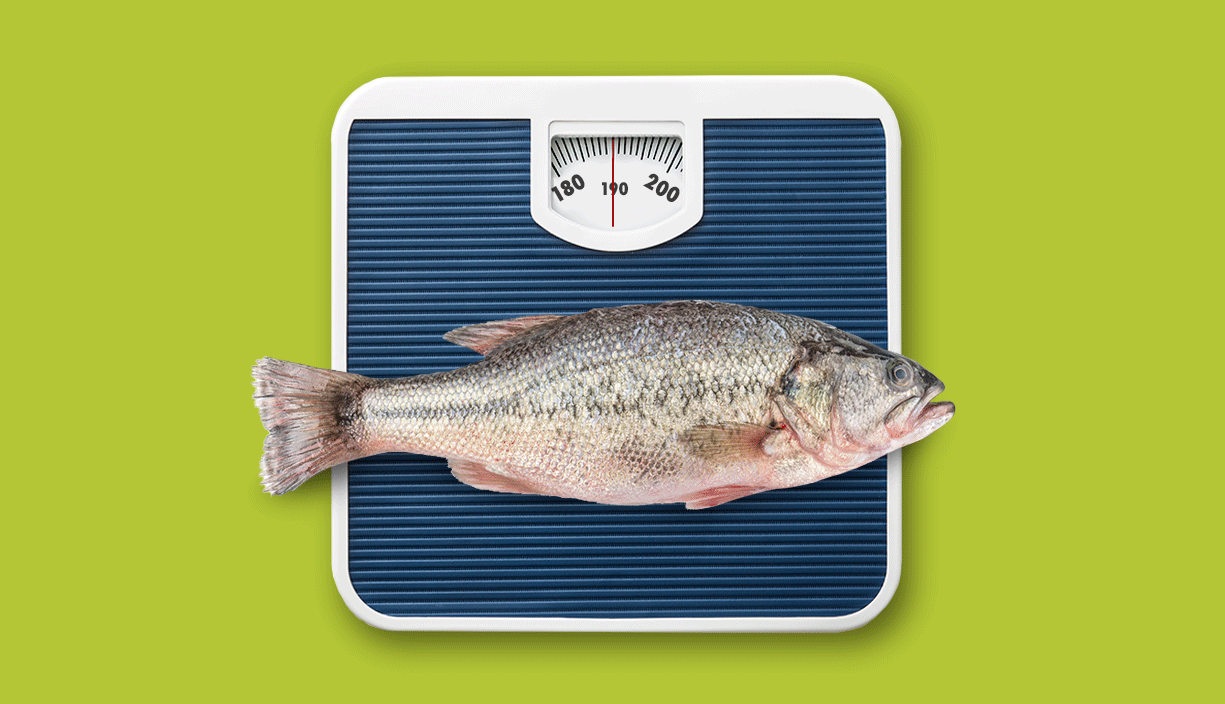
Which fish is your favorite? Did you grow up eating sardines? When did you last have them and how were they prepared? Share your thoughts in the comments below.
We all remember that corny punchline about the “see-food” diet: “I see food and I eat it.” But if your self-care goals include shedding fat, there’s a boatload of reasons to consider getting more fish on your plate. We at Sisters are always swimming in nutrition data to help you wade through health choices more easily.
Fish is a pillar of the ultra-healthy Mediterranean diet
Why? Fish can provide nutrients that support:
Metabolic function
Hormonal function
Blood sugar stabilization
All of those bodily functions are related to weight. In addition, fish are a protein powerhouse. A 2021 review of studies published in Nutrition and Metabolic Insights notes that, “fish are…an outstanding source of…protein, with a relatively low caloric density. Relative to other animal protein sources, fish provides high satiety [and] helps control appetite.” Not only does the protein keep you full; protein helps build muscle, and muscle helps you burn fat.
Make friends with fatty fish
The above is true for most any fish—as long as you don’t smother it with butter or deep fry it and then dunk it into tartar sauce or order a crispy square of it topped with cheese on a bun at the drive-thru. But, according to Healthline, “Fatty species are sometimes considered the healthiest. That’s because fatty fish, including salmon, trout, sardines, tuna, and mackerel, are higher in fat-based nutrients. This includes vitamin D, a fat-soluble nutrient that many people are lacking.” In addition, these varieties boast brain-boosting, disease-fighting omega-3 fatty acids. The healthy fats fight inflammation, which is—yup! —linked to weight gain.
Buh bye, belly fat
Omega-3 fats from salmon, sardines and mackerel may help us to whittle the middle. “Studies have shown that obese/overweight individuals may see a benefit in the reduction of abdominal fat when fish oil supplements are combined with diet and exercise,” Atlanta-based endocrinologist Kelly Wood, M.D., told Sisters.
Related: What to Do When Belly Fat Won’t Budge
Twice a week for a sleek physique
The good stuff ain’t cheap, though. The US Dietary Guidelines for Americans recommend that adults eat a variety of fish and shellfish adding up to 227–283 grams per week. So that’s roughly two seafood meals a week, or at least eight ounces. “Retail seafood, as a whole, costs more than other protein foods (meat, poultry, eggs, beans), and fresh seafood high in [omega-3 fatty acids] costs more,” according to a 2022 study in The American Journal of Clinical Nutrition.
This same study found that Americans with higher incomes eat more fish and more oily fish. The one exception is Asian Americans—on average, even those with low incomes have no problem meeting the recommended dietary requirements. (Ever visit an Asian grocery and notice that in addition to fresh fish, it’s also sold frozen, salted, pickled, fermented, freeze dried in a giant bag, canned…) African Americans will opt for say, wild-caught salmon over farmed as we make more money, the study notes. And even when on a super-tight budget, we eat more fish than white Americans with similar incomes. Interesting.
Get lean with…sardines!
For many reasons, I’m making a case here for sardines, especially the canned variety. They are generally wild caught. They are high in omega-3s, and many major brands are relatively affordable. (Some other brands are…well…you know what they did to oxtails.) Sardines are lower in mercury and heavy metals than many other commercial fish because they are itty bitty and lower on the food chain. (This means they aren’t big fish eating a bunch of other smaller fish that contain mercury—we’re looking at you, albacore tuna!). This makes them safer to eat more frequently, according to fda.gov.
Still, if you have any medical condition, check in with your doctor about sardines. People who have kidney problems or gout, for instance, are often advised to avoid them, according to Healthline.
The protein in sardines
According to Web MD, a 100-gram (roughly 3.5 ounces) portion of canned sardines in oil (drained) contains:
Calories: 208
Fat: 11.4 g
Protein: 24.6 g
Sugars: 0g
That’s almost as much protein as in four large eggs (200 grams), which would have 312 calories, over 20 grams of fat, and 4 grams of naturally occurring sugars. Not that you would eat four eggs.
Let’s look at a Gatorade Protein Bar, chocolate chip flavor (80 grams).